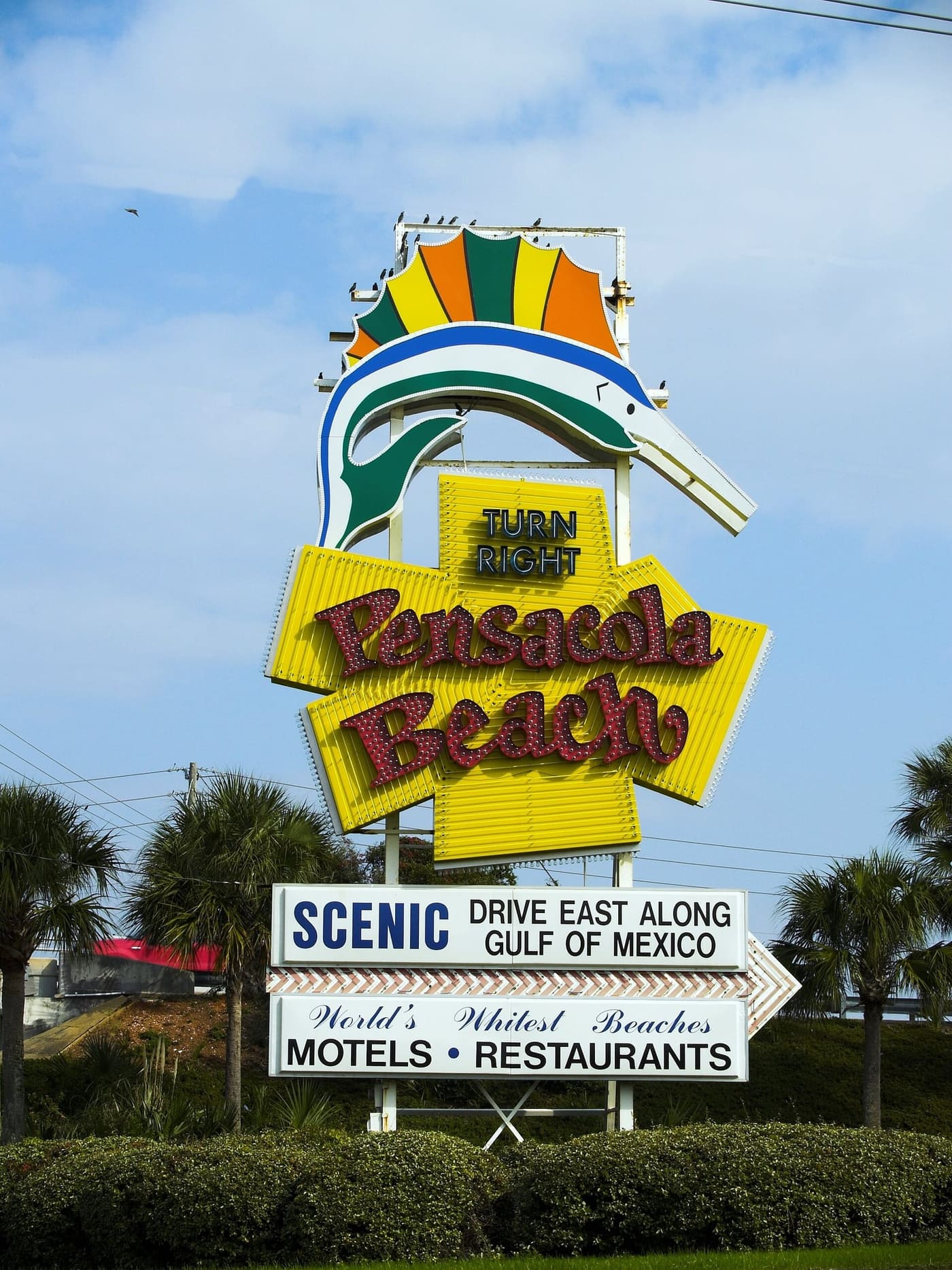
Quick answer, as of September 23, 2026
Florida generally preempts new local vacation rental bans and duration or frequency limits, with exceptions including pre-June 2011 ordinances. Pensacola Beach and Perdido Key owners need a state DBPR vacation rental license, state tax registration and Escambia County's 5 percent tourist development tax account. Gulf Shores prohibits licensed vacation rentals in its R-1 through R-5 districts outside a defined overlay, and Orange Beach bars rentals of 14 days or less in its RS and MHS districts under ordinances adopted April 3, 2018.
Gregg Costin, Realtor, Levin Rinke Realty
Jump to a section
Read this first: three layers of rules
Every short-term rental on this coast answers to three layers. The state decides whether local governments may restrict rentals at all and issues the license and tax registrations. The city or county sets zoning, registration, occupancy, parking and nuisance rules where the state allows. And the condominium declaration, homeowners' association documents or, on Pensacola Beach, the ground lease can restrict or forbid rentals regardless of what the government permits.
Florida and Alabama split at the first layer. Florida preempts local bans; Alabama leaves zoning to its cities, and Gulf Shores and Orange Beach use it. Everything below follows that split, jurisdiction by jurisdiction, with each ordinance named and dated.
Florida: what the state lets local governments do
Section 509.032(7)(b) of the Florida Statutes states that a local law, ordinance, or regulation may not prohibit vacation rentals or regulate the duration or frequency of rental of vacation rentals, and that the paragraph does not apply to any local law, ordinance, or regulation adopted on or before June 1, 2011. Paragraph (7)(a) preempts the regulation of public lodging establishments to the state, including sanitation standards and inspections.
Local governments keep their general codes on noise, parking, trash and building safety, and they can enforce them against a rental like any other property.
The definitions decide whether you need a license. Section 509.242(1)(c) defines a vacation rental as any unit or group of units in a condominium or cooperative or any individually or collectively owned single-family, two-family, three-family, or four-family house or dwelling unit that is also a transient public lodging establishment but that is not a timeshare project.
Section 509.013 defines a transient public lodging establishment as one rented to guests more than three times in a calendar year for periods of less than 30 consecutive days, or advertised as regularly rented for such periods.
The Florida DBPR vacation rental license
The Division of Hotels and Restaurants issues two classes: a Vacation Rental Condominium license for a unit or group of units in a condominium or cooperative, and a Vacation Rental Dwelling license for a single-family house, townhouse, or a unit in a duplex, triplex or quadruplex.
Within each class, a single license covers one house or units in one building owned by the same person. A group license lets a licensed agent cover all units in a building or complex. A collective license lets a licensed agent cover houses or units at separate locations.
The Division's guide says a license is required if you are renting an entire unit more than three times in a calendar year for periods of less than 30 days or 1 calendar month, whichever is less, or if it is advertised or held out to the public as a place regularly rented to guests.
Its fee table lists a single rental unit at $170 for a full year or $90 for a half year, plus a $50 application fee for new applications and a $10 Hospitality Education Program fee.
Buildings three stories or more in height carry one more duty. Section 509.2112 requires the establishment to file, every 3 years, a certificate stating that all balconies, platforms, stairways and railways have been inspected by a person competent to conduct such inspections and are safe, secure and free of defects, with the Division and the local building authority. The Division notes that condominium common-element balconies are the association's responsibility.
Florida taxes on short stays
Section 212.03 levies a tax equal to 6 percent of the total rental charged on transient accommodations and exempts a guest who has entered into a bona fide written lease for longer than 6 months. The Department of Revenue's GT-800034 brochure adds that the applicable county surtax applies too, that the $5,000 surtax limitation does not apply to transient rentals, and that every person renting transient accommodations must register with the Department.
The same brochure exempts rental charges paid by military personnel who are on active duty and present in the community under official orders.
The county surtax is 1.5 percent in Escambia County and 1 percent in Santa Rosa County on the Department's 2025 schedule. On top of that sits the tourist development tax. The Department's local option rate table lists Escambia County at 5.0 percent, collected by the county, and Santa Rosa County at 5.0 percent, collected by the county.
Santa Rosa's own page states that its Clerk of Court collects the tax under Ordinances 91-19, 91-25, 94-03, 96-17, 98-14, 2002-26, 2006-08 and 2013-23, and that the property owner is required to register short term rental property located within Santa Rosa County with the Clerk.
Escambia County's tourist development tax is administered by the Clerk of the Circuit Court and Comptroller, whose office sets up the account; its site could not be read when this page was written, so start there for the registration form. Taken together, a Pensacola Beach or Perdido Key stay of six months or less is taxed at 6 percent state, 1.5 percent county surtax and 5 percent tourist development tax.
Pensacola Beach and the Santa Rosa Island Authority
Escambia County's own page states that Pensacola Beach is owned by Escambia County, Florida, and is under the direction of the Santa Rosa Island Authority, and that 60 percent of the island is public use or public service land with the remaining 40 percent leased for residential and commercial use. The Authority is charged with beach maintenance, recreation facilities, and adoption and enforcement of rules, regulations and improvements.
The county's Land Development Code confirms the structure: for Pensacola Beach leaseholds, the applicant shall be the lessee.
No adopted short-term rental registration rule for Pensacola Beach was found in the county's Land Development Code or on the county's pages. In August 2026, WEAR-TV reported that the Authority proposed a registry of residential properties used as short-term rentals, with proof of DBPR registration and a designated responsible party reachable 24 hours a day, and that its attorney noted some regulations fall under Escambia County's authority.
Whether that proposal was adopted after the August 20, 2026 meeting is not verified here; check with the Authority before you rely on it either way. Confirm the current local requirements as well as the state license, taxes, ground lease and association documents before relying on rental eligibility. The Pensacola Beach leasehold guide covers the lease, and the condo due diligence checklist covers the declaration.
Perdido Key and unincorporated Escambia County
No county-wide vacation rental registration, permitting, occupancy or parking ordinance was found in the September 10, 2020 print of the Escambia County Land Development Code or on the county's website. One provision found in that older code print concerns condo-hotels, which may let an owner occupy a unit without rental charge for up to 12 weeks a year provided the unit is otherwise available for short-term transient rentals of less than 30 days.
The Perdido Key mixed-use district text sets density limits and refers to the Perdido Key master plan, not to rental registration.
In September 2022 a county commissioner circulated a draft registration ordinance with a proposed $500 initial fee and $250 renewal; WEAR-TV reported it as a draft with no vote scheduled, and no adopted version was found. Amendments to the county code after 2020 were not checked in the code publisher's database, which does not load for automated readers, so confirm the current code before you buy.
For Perdido Key, obtain current zoning and local-rule confirmation as well as the state license, tax accounts and condominium documents. An older code print cannot establish that no later ordinance exists.
The City of Pensacola
No short-term rental or vacation rental ordinance was found on the City of Pensacola's pages. The city's Ordinances to Know page lists refuse storage, construction waste, contractor registration and stormwater controls, and nothing on rentals.
The city's Business Tax Receipt page requires a receipt for anyone who engages in or manages any business, occupation or profession within the corporate limits, due by September 30 each year, and does not mention rentals specifically. Florida's preemption would limit what the city could adopt in any event. Verify the current Code of Ordinances and the zoning for the parcel, and treat the state rules as the floor.
Gulf Shores, Alabama
Gulf Shores regulates short-term rentals through licensing and zoning, and the rules are specific. The city's rental license page states that all property owners that engage in the rental of their property in the city's corporate limits or police jurisdiction are required to complete and submit a business license application, with an exemption for an owner of no more than one unit leased under a written agreement of 180 days or more. Licenses expire December 31, and a $45 rental fee applies to short-term rentals.
Ordinance No. 1738, adopted November 12, 2013, added sections 8-43, 8-44 and 8-45 to the city code. It defines a vacation rental as a lease or rental of a dwelling unit for any period of fewer than 180 consecutive days and adds a $45 per-unit annual license fee.
The same ordinance requires a safety inspection by the Building Official, covering smoke detectors, fire extinguishers, stairs, emergency escape openings, electrical, balconies and decks, pools and 911 addressing, as a condition of licensing, and deems the report current for three years. Section 8-44 allows immediate suspension for hazards and a 21-day cure period for other violations.
The zoning amendment adopted February 25, 2019 (text amendment ZTA2018-04 to Zoning Ordinance 1584) says where licensed units may operate. They are allowed in the Single Family and Duplex Tourist Rental Overlay District and the BN, BG, BT, ICW-N and ICW-S districts, and in multi-family uses designated for vacation rentals in planned unit developments.
They are prohibited in the AG, ATP, ED, IND, OS, R-1, R-2, R-3, R-4 and R-5 districts and in single-family PUD subdivisions, with a conditional use permit path for individual multi-family developments in R-3 and R-4.
The same amendment defines the overlay as all R-1 and R-2 land west of Highway 59 and south of Stanton Creek or West 2nd Avenue, land south of Little Lagoon west of West 7th Street through Laguna Key, and waterfront R-1 parcels on the north side of Little Lagoon and Fort Morgan Road west of West Brigadoon Trail.
It grandfathers single-family and duplex units licensed on August 31, 2009 and multi-family units licensed on August 31, 2018, treats occupancy by more than one family for longer than 30 consecutive days as a violation, prohibits parking in public rights-of-way, and limits signage to what the underlying district allows.
The city's lodging tax page states that lodging tax is due on any short-term condo, house or duplex rental, at 10 percent inside the corporate limits and 5 percent in the police jurisdiction, for a combined total of 16 percent and 11 percent respectively once the state and county shares are added. Returns are due by the 20th of the following month even when no tax was collected.
The city's February 23, 2026 agenda packet contains the draft amendment associated with Ordinance 2201, including vacation rental signage and licensing changes. The city also lists a consolidated zoning ordinance amended by 2201, but its complete adopted text could not be retrieved in this review. Treat the 2019 district discussion above as historical background and obtain the current adopted requirements from Planning before buying or operating.
Orange Beach, Alabama
Orange Beach draws the line at two weeks. Its vacation rental regulations page defines a vacation rental as a one- or two-family residential dwelling rented for fourteen consecutive days or less and cites two ordinances adopted April 3, 2018.
Ordinance No. 2018-1282 amends the zoning ordinance to prohibit vacation rentals in the RS and MHS zoning districts, to allow them in the Beach Overlay District and in single-family or duplex planned unit developments unless the approved master plan prohibits them, and to give existing operators 90 days to apply for a license and become legal nonconforming uses.
Ordinance No. 2018-1283 adds Chapter 50, Article XI, the Vacation Rental Ordinance, for property in the RS-1, RS-2, RS-3 and MHS districts outside the Beach Overlay District and inside the corporate limits. It requires a $500 vacation rental license and an application with a floor plan, a site plan showing on-site parking and trash enclosures, and a code-compliance affidavit.
The license also requires an owner or agent available by telephone 24 hours a day, 7 days a week while the property is occupied, and a written rental agreement that states the occupancy limits, noise prohibitions and vehicle parking requirements.
Occupancy under 2018-1283 runs two persons per bedroom, from two for a studio or one-bedroom to twelve for six bedrooms, plus two children age 14 or under, with bedroom minimums of 70 square feet for single occupancy and 50 square feet per person for multiple occupancy.
The licensee must respond within thirty minutes of being notified of a complaint, keep trash cans clean and the property free of debris, manage noise, allow city inspection on 24-hour written notice, and post the license and the Good Neighbor Brochure inside the unit. The city may revoke, suspend or refuse to renew a license for violations.
A business license is required for any rental in Orange Beach, and the city's FAQ states that the license is the responsibility of the owner, not the management company. The city's lodging tax rate is 16 percent: 10 percent city, 4 percent state and 2 percent Baldwin County lodging tax.
Alabama lodging taxes
The Alabama Department of Revenue describes lodgings tax as a privilege tax on renting rooms, lodgings or other accommodations to transients for periods of less than 180 days of continuous occupation. The state rate is 4 percent in all counties outside the sixteen-county Alabama Mountain Lakes area, where it is 5 percent.
Baldwin County's lodging tax in the Gulf Shores and Orange Beach area is 2 percent, administered by the state per the Gulf Shores tax page, and each city adds its own 10 percent inside the corporate limits. The Department notes that it does not administer all county or city lodgings taxes, so register with the city as well.
Check association and lease restrictions separately
A government permit does not override a private restriction. Section 718.110(13) provides that a condominium amendment prohibiting unit owners from renting their units or altering the duration of the rental term or specifying or limiting the number of times unit owners are entitled to rent their units applies only to unit owners who consent to the amendment and unit owners who acquire title to their units after the effective date of that amendment.
Section 720.306(1)(h) generally limits later HOA rental restrictions to consenting owners and later purchasers. But it expressly allows amendments regulating rentals shorter than 6 months or more than three rentals per calendar year to apply to all owners. That exception matters especially to short-term rentals.
The practical reading: a building that allows nightly rentals today can vote to stop them, and as a new buyer you would be bound by an amendment adopted before your closing. Read the declaration, every recorded amendment and the rules, and ask the association in writing for any pending rental amendments. On Pensacola Beach, add the ground lease and any Santa Rosa Island Authority approvals to that stack.
The rules at a glance
| Jurisdiction | License or permit | Zoning limits | Taxes on short stays | Ordinance and date |
|---|---|---|---|---|
| Pensacola Beach (Escambia County, Santa Rosa Island Authority) | Florida DBPR vacation rental license; state and county tax accounts; lease and association approvals | State preemption; no adopted local registration found; Authority registry proposed August 2026 | 6 percent state, 1.5 percent surtax, 5 percent tourist development tax | F.S. 509.032(7)(b); F.S. 509.242; county LDC (2020 print) |
| Perdido Key and unincorporated Escambia County | Same state license and tax accounts | State preemption; no county registration ordinance found | Same as above | 2022 draft ordinance not adopted (news report) |
| City of Pensacola | State license and taxes; city Business Tax Receipt for any business | Current city code not fully verified; confirm parcel requirements | Same as above | No absence-of-ordinance conclusion from the general information page |
| Gulf Shores, AL | City business license with $45 rental fee; safety inspection every three years; local emergency contact | 2019 text lists permitted districts and exceptions; confirm the current adopted zoning after Ord. 2201 | 16 percent in the corporate limits (4 state, 2 county, 10 city); 11 percent in the police jurisdiction | Ord. 1738 (Nov. 12, 2013); zoning amendment ZTA2018-04 (Feb. 25, 2019); Ord. 2201 (Feb. 23, 2026; agenda draft read, adopted-text verification pending) |
| Orange Beach, AL | City business license; $500 vacation rental license in RS-1, RS-2, RS-3 and MHS outside the Beach Overlay | Rentals of 14 days or less prohibited in RS and MHS; allowed in the Beach Overlay District and permitted PUDs | 16 percent (4 state, 2 county, 10 city) | Ord. 2018-1282 and 2018-1283 (both April 3, 2018) |
What this page does not do
It does not estimate what a rental earns, and it does not replace the current code. Nightly rates and occupancy are property-specific and change with the season and the manager; the rules above tell you whether and how a property may be rented, and the calculators let you run your own numbers privately.
Ordinances are amended, so every citation here carries the date it was read. For Navarre Beach in Santa Rosa County, no county vacation rental registration ordinance was found in the November 10, 2025 Land Development Code beyond the Clerk's tourist tax registration.
Related guides
The guides that cover the property side of the same decision.
Frequently asked questions
Can Pensacola Beach or Escambia County ban short-term rentals?
Not under current Florida law. Section 509.032(7)(b) states that a local law, ordinance or regulation may not prohibit vacation rentals or regulate the duration or frequency of rental of vacation rentals, except for local rules adopted on or before June 1, 2011. Local governments can still enforce noise, parking, trash and safety codes. The Santa Rosa Island Authority proposed a rental registry in August 2026 whose adoption status was not verified in this review, and lease terms and condominium documents can restrict rentals privately.
Do I need a license to rent a Pensacola Beach or Perdido Key home on Airbnb?
Yes, from the state. The Division of Hotels and Restaurants at the Florida DBPR licenses a vacation rental when an entire unit is rented more than three times in a calendar year for periods of less than 30 days or one calendar month, or is advertised as regularly rented to guests. A single-unit license costs $170 for a full year plus a $50 application fee and a $10 education fee, and the license class depends on whether the unit is a condominium or a dwelling.
What taxes apply to a short-term rental in Escambia County?
Three layers on stays of six months or less: Florida's 6 percent state sales tax on transient rentals under section 212.03, Escambia County's 1.5 percent discretionary sales surtax, and Escambia County's 5 percent tourist development tax, which the Department of Revenue's rate table shows is collected by the county. Santa Rosa County's tourist tax is also 5 percent, collected by its Clerk of Court, which requires owners to register each rental property. Active-duty military on orders are exempt from the state tax.
Can I short-term rent a house in Gulf Shores?
Only where current zoning and licensing allow it. The 2019 zoning amendment describes permitted areas, conditional uses and grandfathered properties, but Ordinance 2201 amended the code in February 2026. This review read the agenda draft, not the complete adopted text. Obtain written parcel-specific confirmation from Planning and Revenue. Ordinance 1738 and the city's rental-license page describe licensing and safety inspections; tax registration is a separate step.
What are Orange Beach's short-term rental rules?
Two ordinances adopted April 3, 2018 govern them. Ordinance 2018-1282 defines a vacation rental as a one- or two-family dwelling rented for fourteen consecutive days or less, prohibits them in the RS and MHS zoning districts, and allows them in the Beach Overlay District and in single-family PUDs unless the master plan says otherwise. Ordinance 2018-1283 creates a $500 vacation rental license for the RS-1, RS-2, RS-3 and MHS districts with occupancy limits, a 24-hour contact and a 30-minute complaint response.
Does the City of Pensacola have a short-term rental ordinance?
This review did not complete a current city-code check, so it cannot confirm the presence or absence of a specific rental ordinance. The city's general Ordinances to Know page is not a complete code inventory. Confirm the parcel's zoning, business-tax requirements and any local rental or safety rules with the city, alongside state licensing and taxes.
Can my condominium or homeowners' association stop me from renting short term?
Yes. Condo rental amendments under section 718.110(13) generally bind consenting owners and later purchasers. HOA rules differ: section 720.306(1)(h) permits amendments regulating rentals shorter than 6 months or more than three rentals per calendar year to bind all owners. Other HOA rental amendments generally bind consenting owners and later purchasers. Have the declaration, amendments and the relevant exception reviewed for your specific property.
Does this page estimate rental income?
No, on purpose. Nightly rates, occupancy and expenses vary by building, season and management, and a projection on a public page would be a guess. The rules above tell you whether and how a property may be rented; your own numbers belong in the mortgage and rental calculators, and a licensed manager or accountant can review them with you.
Sources and references
The sources below support this guide, with read dates and any limits identified in the text. Rules and rates change: verify the current version and property-specific requirements before you act.
- Gulf Shores council agenda, February 23, 2026: Pages 21-25 contain a draft amendment; not proof of final adopted wording (read September 23, 2026)
- Gulf Shores consolidated zoning ordinance listing: Official listing identifies 2201; complete adopted text remains a verification gap (read September 23, 2026)
- Florida Senate: 2026 section 720.306: Subsection (1)(h)2 allows specified short-term rental restrictions to bind all owners (read September 23, 2026)
- Florida Statute 509.032, Duties (vacation rental preemption, subsection (7)) (read September 23, 2026)
- Florida Statute 509.242, Public lodging establishments; classifications (vacation rental definition) (read September 23, 2026)
- Florida Statute 509.013, Definitions (transient public lodging establishment) (read September 23, 2026)
- Florida DBPR, Division of Hotels and Restaurants: Vacation rental and timeshare project licensing guide: license classes, when a license is required, fees, balcony certificate (read September 23, 2026)
- Florida Statute 509.2112, Public lodging establishments three stories or more in height; inspection rules (read September 23, 2026)
- Florida Statute 212.03, Transient rentals tax; rate, procedure, enforcement, exemptions (read September 23, 2026)
- Florida Department of Revenue: Sales and Use Tax on Rental of Living or Sleeping Accommodations, GT-800034 (R. 10/25) (read September 23, 2026)
- Florida Department of Revenue Form DR-15DSS, Discretionary Sales Surtax Information for Calendar Year 2025 (read September 23, 2026)
- Florida Department of Revenue Form DR-15TDT, Local Option Transient Rental Tax Rates (R. 03/25): Escambia 5.0 percent and Santa Rosa 5.0 percent, collected by the county (read September 23, 2026)
- Santa Rosa County: Tourist Development Tax: 5 percent rate, the levying ordinances, Clerk collection and registration (read September 23, 2026)
- Escambia County: Pensacola Beach: county ownership and Santa Rosa Island Authority direction; 40 percent leased (read September 23, 2026)
- Escambia County: Santa Rosa Island Authority board page (read September 23, 2026)
- Escambia County Land Development Code (Part III), print dated September 10, 2020: public lodging establishment definition; condo-hotel rule; Pensacola Beach leasehold references; no vacation rental registration provision found (read September 23, 2026)
- WEAR-TV, August 16, 2026 (updated August 17, 2026): Santa Rosa Island Authority weighs new rules for Pensacola Beach short-term rentals: news report of a proposed registry; adoption status not verified (read September 23, 2026)
- WEAR-TV, September 21, 2022: Escambia County looking to regulate rental properties: news report of a draft county ordinance; no adoption found (read September 23, 2026)
- City of Pensacola: Ordinances to Know (read September 23, 2026)
- City of Pensacola: Business Tax Receipts (read September 23, 2026)
- City of Gulf Shores: Rental License (read September 23, 2026)
- City of Gulf Shores: Lodging Tax (read September 23, 2026)
- City of Gulf Shores: Taxes (read September 23, 2026)
- City of Gulf Shores Ordinance No. 1738 (adopted November 12, 2013): sections 8-43, 8-44 and 8-45, dwelling unit vacation rentals (read September 23, 2026)
- City of Gulf Shores zoning text amendment ZTA2018-04 (adopted February 25, 2019): Articles 4, 6-18 and 10-8, dwelling units licensed for vacation rental: agenda copy; the ordinance number is not printed on it (read September 23, 2026)
- City of Gulf Shores Planning Commission staff report, ZTA25-06 (October 21, 2025): current allowed districts and the draft signage rules (read September 23, 2026)
- City of Orange Beach: Vacation Rental Regulations (read September 23, 2026)
- City of Orange Beach Ordinance No. 2018-1282 (adopted April 3, 2018): zoning definitions and districts for vacation rentals (read September 23, 2026)
- City of Orange Beach Ordinance No. 2018-1283 (adopted April 3, 2018): Chapter 50, Article XI, Vacation Rental Ordinance (read September 23, 2026)
- City of Orange Beach FAQ: business license for a rented condo or house (read September 23, 2026)
- City of Orange Beach FAQ: lodging tax rate (read September 23, 2026)
- Alabama Department of Revenue: Lodgings Tax FAQ (state rates) (read September 23, 2026)
- Alabama Department of Revenue: Lodgings Tax: stays of less than 180 days; local taxes not all state administered (read September 23, 2026)
- Santa Rosa County Land Development Code (November 10, 2025 print): no vacation rental registration provision found (read September 23, 2026)
- Florida Statute 718.110, Amendment of declaration (rental restriction amendments, subsection (13)) (read September 23, 2026)
- Florida Statute 720.306, Meetings of members; voting and election procedures; amendments (rental restrictions, subsection (1)(h)) (read September 23, 2026)
- City of Destin: Short-term rental FAQ (read September 23, 2026)
← All Gulf Coast guides and tools
Buying a place you plan to rent?
Send the address and we will pull the ordinance, the license steps and the association documents that apply before you offer. Call or text (850) 266-5005 with any question, no obligation.